
Camel Carton Price Guide for Smart Buyers Canada
A one-pack price can look manageable until you do the math across a week or a month. That is why a camel carton price guide matters to regular buyers who already know their brand and want a clearer read on value, stock-up timing, and what actually moves the total at checkout.
Camel remains a staple purchase because the brand has wide recognition, multiple line extensions, and steady demand across full-flavor, smooth, and menthol preferences. But carton pricing is rarely as simple as multiplying a single pack by ten. Depending on where you buy, which Camel variant you want, and how taxes are applied, the final number can swing more than many buyers expect.
What a camel carton price guide should actually tell you
A useful price guide is not just a number on a screen. It should help you compare carton cost against pack pricing, identify whether a listing reflects standard retail or discount positioning, and separate product price from location-based charges. Adult buyers shopping online or across different markets are usually not trying to learn the category from scratch. They want to know whether the price is competitive and whether it makes sense to buy one carton or more.
That matters even more with a brand like Camel, where availability can vary by style. A carton of Camel Filters may price differently from Camel Blue, Camel Crush, or menthol options, even when the packaging format looks similar. Some of that difference comes from retailer margin, but some of it comes from demand, supply, and local market conditions.
The main factors behind Camel carton pricing
The biggest driver is still tax. Cigarette pricing changes heavily by state, province, and market, and carton totals reflect that immediately. Two buyers looking at the same Camel carton can see very different checkout prices if one market carries a much higher excise burden.
Retail channel matters next. A convenience store, local smoke shop, and online specialist retailer do not always work from the same markup structure. High-traffic stores often charge more for convenience. Inventory-focused tobacco retailers may price more aggressively, especially when they move volume and carry multiple cigarette brands instead of a limited shelf set.
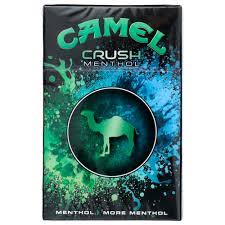
Camel Carton Price Guide
Variant also matters. Standard lines often price more consistently because turnover is higher. Specialty variants or less common formats can cost more simply because they are harder to source or stocked in lower quantity. Imported or market-specific packaging can also move the number up.
Promotions and carton discounts are another variable. Some retailers keep pack pricing high but sharpen carton value. Others do the opposite when they want to support impulse pack sales. If you are comparing options, always check the actual carton total instead of assuming ten packs will equal the same number.
Typical carton price ranges buyers usually see
A Camel carton usually sits in a broad mid-to-premium cigarette price band, but there is no single national number that stays accurate for long. In lower-tax markets, buyers may see carton pricing that feels relatively close to ten discounted packs. In higher-tax markets, the same carton can move up fast and erase most of the expected savings.
As a working rule, a carton price that looks clearly lower than buying ten individual packs at a standard local store is usually a good sign. A carton price that only barely beats ten packs may still make sense if availability is tight or if you are buying a specific Camel style that is harder to find. But if the difference is minimal, the value is mostly convenience, not savings.
That is where seasoned buyers tend to think in monthly totals rather than single transactions. Saving even a small amount per carton adds up if Camel is your regular buy. On the other hand, if your market is already heavily taxed, the price gap between stores may be narrower than expected.
Comparing Camel carton value by variant
Not every Camel carton should be judged the same way. Camel Blue and Camel Filters often serve as baseline comparisons because they are common, recognizable, and easier to benchmark from retailer to retailer. If you are seeing a higher-than-expected price on one of those standard lines, it usually points to taxes or a retailer premium rather than rarity.
Camel Crush and menthol-oriented options can be different. Demand remains strong in many areas, and availability can become uneven depending on regulation and regional inventory patterns. When that happens, buyers may pay more for access even if the underlying product is not meant to be a luxury-tier item.
Packaging details also matter. Some buyers assume every carton contains the exact same count and format across all markets, but product presentation can vary. If a listing seems off from the expected price, make sure you are comparing the same carton configuration and market version.
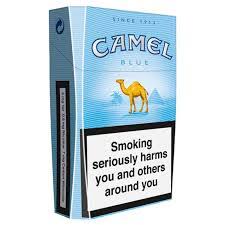
Camel Carton Price Guide
When carton buying makes the most sense
Carton buying is usually the better move for repeat smokers who already know their brand and do not switch often. If you buy Camel consistently, carton pricing generally gives better control over your monthly spend and cuts down on stop-in purchases at higher-margin locations.
It also makes sense when local stock is inconsistent. A buyer who has already had trouble finding a preferred Camel style may put more value on securing quantity than chasing a small difference in price. In that case, the practical benefit is stable supply.
The trade-off is simple. A carton costs more upfront, even when the per-pack value is better. For some buyers, that is the right call because it lowers average cost. For others, especially occasional smokers, pack-by-pack buying may still be more manageable even if it is less efficient.
How to read a Camel listing without getting misled
The cleanest way to compare a Camel carton is to reduce everything to per-pack cost first, then look at the final taxed total. That helps you see whether a retailer is offering actual carton value or just presenting a large number in bulk packaging.
You should also look at whether the retailer specializes in tobacco inventory or treats cigarettes like a side item. Broad tobacco retailers tend to have a better chance of competitive carton pricing because the category is core to their business. That is especially relevant for buyers who want familiar names and multiple product types in one order rather than shopping across several stores.
Another point buyers miss is stock depth. A cheap posted price does not help if the item is frequently unavailable, substituted, or limited. Reliable inventory has value, particularly with established brands where repeat buyers want the same product every time.
Camel carton price guide for online buyers
Online buyers usually care about three things: real inventory, clear product labeling, and pricing that holds up once checkout costs appear. A low starting number can lose its appeal if fees, shipping conditions, or market-based charges push the total back into local-store territory.
That does not mean online buying lacks value. It often works best for adult buyers who want access to harder-to-find cigarette variants, broader product selection, or wholesale-style pricing across several tobacco categories in one order. A specialist retailer with deep cigarette inventory can be more efficient than piecing purchases together from convenience stores.
For example, a catalog-driven shop like Backwoodstore fits buyers who already know what they want and are comparing brand availability, carton pricing, and multi-category ordering convenience. The key is still the same – compare the final number, not just the shelf price.
How price-conscious buyers can make better carton decisions
If Camel is your regular brand, the smartest approach is consistency in how you compare. Check the exact variant, calculate the per-pack cost, and judge the final total against your usual local price. That keeps the decision simple and avoids getting distracted by a low headline number that does not reflect the real cost.
It also helps to watch timing. Prices can shift with tax changes, retailer promos, and supply movement. If you find a dependable source with solid carton value on your preferred Camel style, buying before a price increase can matter more than chasing tiny short-term differences between sellers.
The best carton buy is not always the absolute lowest listed number. It is the one that balances competitive pricing, real stock, and the exact Camel variant you actually smoke. For most adult buyers, that is what turns a routine purchase into a better one.
